The Hidden Layers of Safety in Aerial Learning (and how they affect learning)
- Sara | WakefulAscent

- Jan 5
- 4 min read
“Safety” is one of the hottest topics in all of aerial, but when we think of it, we usually think about rigging, mats, and safe training practices. Less talked about but also important are the more hidden layers of safety influencing learning, progress, and student retention.
Social and emotional safety may seem less tangible and harder to talk about than rigging standards, but they are nonetheless shaping the student experience. Where fear, challenge, visibility, and unfamiliar positions are the norm, how can we support students? It's not about removing challenge or discomfort, but learning to differentiate between what's constructive and what's not.
Physical Safety: The Foundation of Aerial Learning
Physical safety is the most obvious layer:
equipment and rigging
spotting and progressions
load management and fatigue awareness
New aerial students often do not come with this kind of knowledge and trust their teacher to lead them safely. But even if the room is 100% up to standard, if a teacher looks up uncertainly at the rigging, hesitates before saying it's okay to drop, or seems anxious, students' sense of safety will decrease. They are watching the teacher for signals of safety, so it's important for us to be aware of what we are communicating, intentionally or not. Knowing that our equipment is safe and knowing that our instructions are safe are essential.
Social Safety: Belonging and Status
Social safety relates to how students experience themselves within the group.
It asks questions like:
Will I be embarrassed if I fail?
Am I being compared?
Am I taking too much time on the apparatus?
Do I belong here?
Will I be judged if I struggle?
Does the teacher like me?
Social safety strongly affects a student's willingness to try something new or challenging. When students feel socially threatened, they may limit their effort or overexert. They may push past their limits to appear capable, or hold back to avoid attention altogether.
In either case, the brain's preoccupation takes resources away from learning and precise motor engagement.
Emotional Safety: Internal Permission & Safe Space
Emotional safety is about a student’s relationship with their own internal experience.
It asks:
Am I allowed to feel unsure, scared, frustrated, or conflicted here?
Do I need to act a certain way to be accepted?
Is there space for hesitation without judgment?
And on another level:
Is this space safe from emotional outbursts?
Can I trust everyone to manage their emotions?
Is the teacher ready to respond if somebody starts to express anger or frustration?
As the teacher, part of our job is to monitor the room for emotional shifts and be prepared to redirect and reset the room when needed.
How Safety Affects Learning
Each layer of safety supports a different aspect of learning:
Physical safety supports basic participation
Social safety supports risk-taking
Emotional safety supports presence and sensory awareness

Again, the goal is not to eliminate every fear, anxiety, and concern students have. But we can shape the class conditions to maximize the sense of safety for everyone in each category (and that includes the teacher).
Safety is Curated in Class Conditions
As the teacher, we can work to create conditions where students can stay present with challenge and fear without becoming overwhelmed.
As teachers, we influence this constantly through small, often unconscious decisions:
how we respond to hesitation
whether we offer students choice
how we frame mistakes
how predictable or ambiguous our expectations are
These choices shape not just what students learn, but how they learn to relate to themselves while learning.

A few ways to support social and emotional safety in the aerial classroom: -Show warmth, use students' names, help your students feel seen
-Model acceptance when you and others make mistakes
-Create a culture of support and celebration rather than comparison -Use humor, theatrics, and play to bring levity to the room
-Introduce students to one another
-2 students per apparatus can be a powerful way to support connection and bonding
-Interactive games and drills
-Model a regulated nervous system state
Some inquiries for you as a teacher: What makes you feel most safe in aerial class?
What signs tell you a student or group feels emotionally and socially safe? What are you already doing to support social and emotional safety?
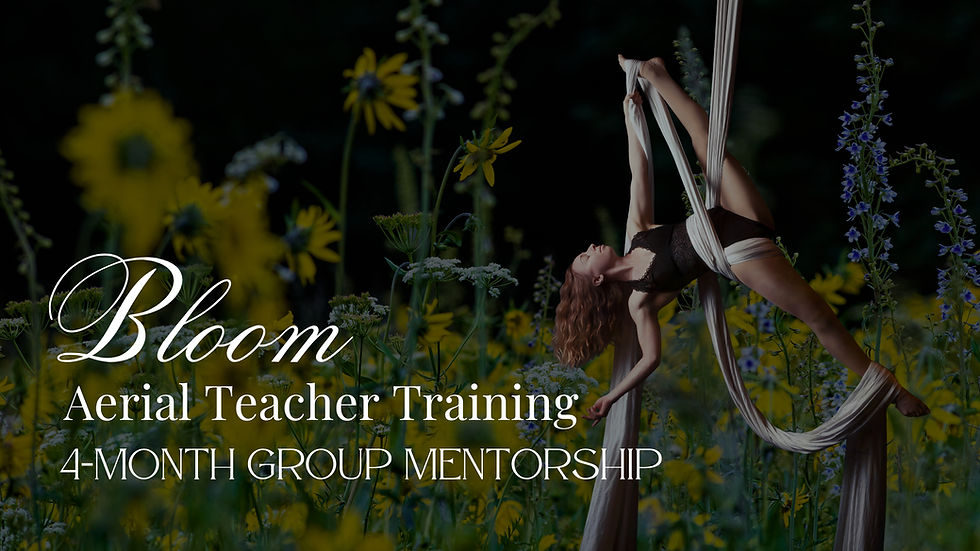
Do you feel safe on social and emotional levels as the teacher? What is one thing you could shift, remove, or add to increase the social and emotional safety in your classroom? In the BLOOM Aerial Teacher Training, we explore the layers of safety in depth, including how to establish these layers of safety, identify when students feel unsure, and restore safety after it is broken.