Why Aerial Teacher Training Isn’t a Beginner-Intermediate-Advanced Ladder
- Sara | WakefulAscent

- Mar 1
- 3 min read

In the aerial world, we love levels.
Beginner. Intermediate. Advanced.
(Even though different studios define them very differently).
But when it comes to teacher training, it limits and misguides us to use those categories. And if you attended a week-long teacher training and walked away feeling oddly...unprepared and unsure what you learned?
Here's why.
1. Skill Level ≠ Teaching Capacity
Someone can execute advanced drops and still:
Struggle to sequence a safe progression
Miss nervous system overwhelm in a student
Over-cue and create cognitive overload
Default to “just try harder” when someone gets stuck
And someone with “intermediate” aerial skills can be an exceptional teacher because they:
Understand motor learning
Know how to manage a room
Read bodies well
Create psychological safety
Teaching is not a trick hierarchy. It’s a systems skillset.
2. Teaching Develops in Layers, Not Tiers
In the BLOOM Aerial Teacher Training, I organize development around lenses:
Nervous system literacy
Motor learning stages
Proprioceptive development
Risk & responsibility
Learning theories & design
Leadership and classroom ecosystem
Technical foundations & mechanics
These aren’t “level 1, 2, 3.”
They’re overlapping layers.
You can be highly developed in one and underdeveloped in another. That’s normal. And far more honest than pretending growth moves in a straight line.
3. “Advanced” Often Just Means More Complex Tricks
In many trainings, “advanced” becomes shorthand for:
Harder skills
Higher risk
Bigger drops
But complexity of skills does not automatically equal sophistication of pedagogy.
In fact, the more advanced the tricks, the more refined your foundations need to be.
If you don’t understand:
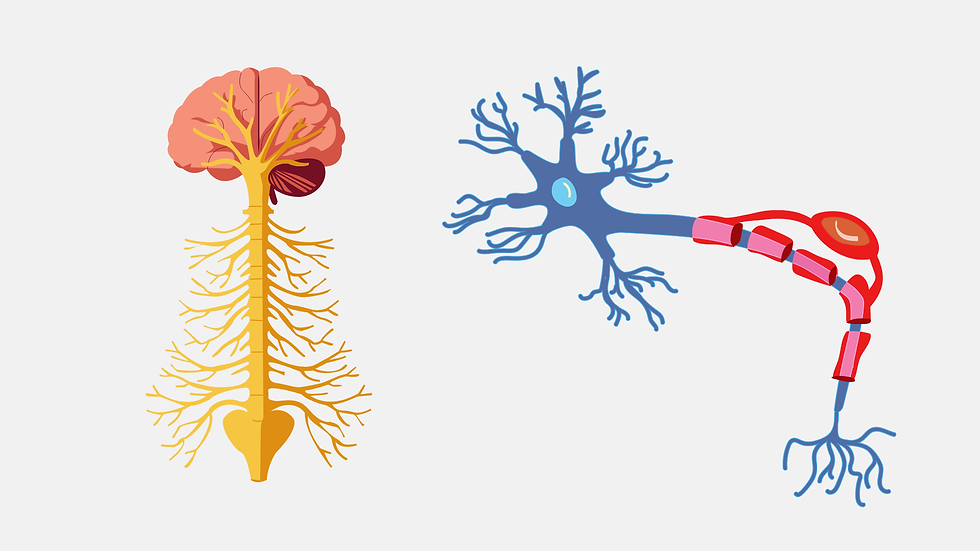
How the nervous system affects information processing
How students build motor maps
How fear changes motor control
How cognitive load affects retention
How proprioception impacts clean pathways
Then adding harder tricks just adds chaos.
4. Good Teaching Happens Between the Lines
Good teaching isn't having been shown one teacher's approach to teaching an advanced skill. It's:
Shaping a learning environment
Adapting class to support diverse students
Knowing what elevates and mitigates risk
Analytical skills built on anatomical, psychological, neurological, and learning theory foundations
Understanding safety vs. threat states
Familiarity with common student errors and challenges
Cognitive stage → associative stage → autonomous stage (motor learning)
Gradual myelination and pattern refinement
Feedback loops in the classroom
You can have an “advanced” student who is neurologically in a high-threat state and regresses to beginner-level coordination.
You can have a “beginner” who integrates movement quickly because their nervous system feels safe and resourced.
Leveling teachers by tricks ignores the biology of learning.
5. Identity-Based Labels Limit Growth
When someone joins a training labeled “advanced,” there’s pressure.
They think:
This makes me an advanced teacher.
That shuts down curiosity.
And teacher development requires a mindset of continual growth.
In BLOOM, the invitation is different:
You’re not a “beginner teacher” or an “advanced teacher.”
You are an evolving teacher.
Always.
6. Real Teaching Mastery Is Integrative
True teaching mastery looks like:
Clear progressions rooted in biomechanics
Nervous system-informed cueing
Strong learning design skills
Relational teaching
Risk assessment and ethical clarity
The ability to zoom in and out — from micro engagement to classroom culture
That doesn’t live on a ladder.
It lives in a web.
So What Do I Teach Instead in my Aerial Teacher Training?
I teach integrative foundations deeply.
Because when foundations are deep enough:
Your cues work better
Your students develop technical mastery and movement quality early on.
You get your students better results with less effort
Your classes feel calmer
Teaching feels easy and uplifting
Your authority becomes embodied
Not because you know the hardest tricks.
But because you understand how learning actually works.
The Truth
Most aerial teacher trainings are organized around content density and trick vocabulary.
I organize around pedagogy - how we teach.
Because if you learn how to think about teaching — through nervous system literacy, motor learning science, biomechanics, and leadership — you can teach any skill and any level of student.
That’s scalable.
That’s sustainable.
That’s true development.
Think of it this way. An absolute beginner aerialist on day one can learn excellent technique and control and move through a short sequence with beautiful movement quality - regardless of their background and prior skills. An intermediate of 5 years can know 100 tricks but not be able to perform any of them with precision and intentionality.
That's the difference - developing the aerialist, not the trick collection, and developing the teacher, not the trick dispenser.
Aerial is more than tricks. And so is teaching.
If you’re ready to move beyond tiered labels and into layered understanding, that’s exactly what we build inside BLOOM Aerial Teacher Training and Certification. Space is limited. Accepting applications for aerialists committed to a higher standard of teaching and better outcomes for their students.